 By
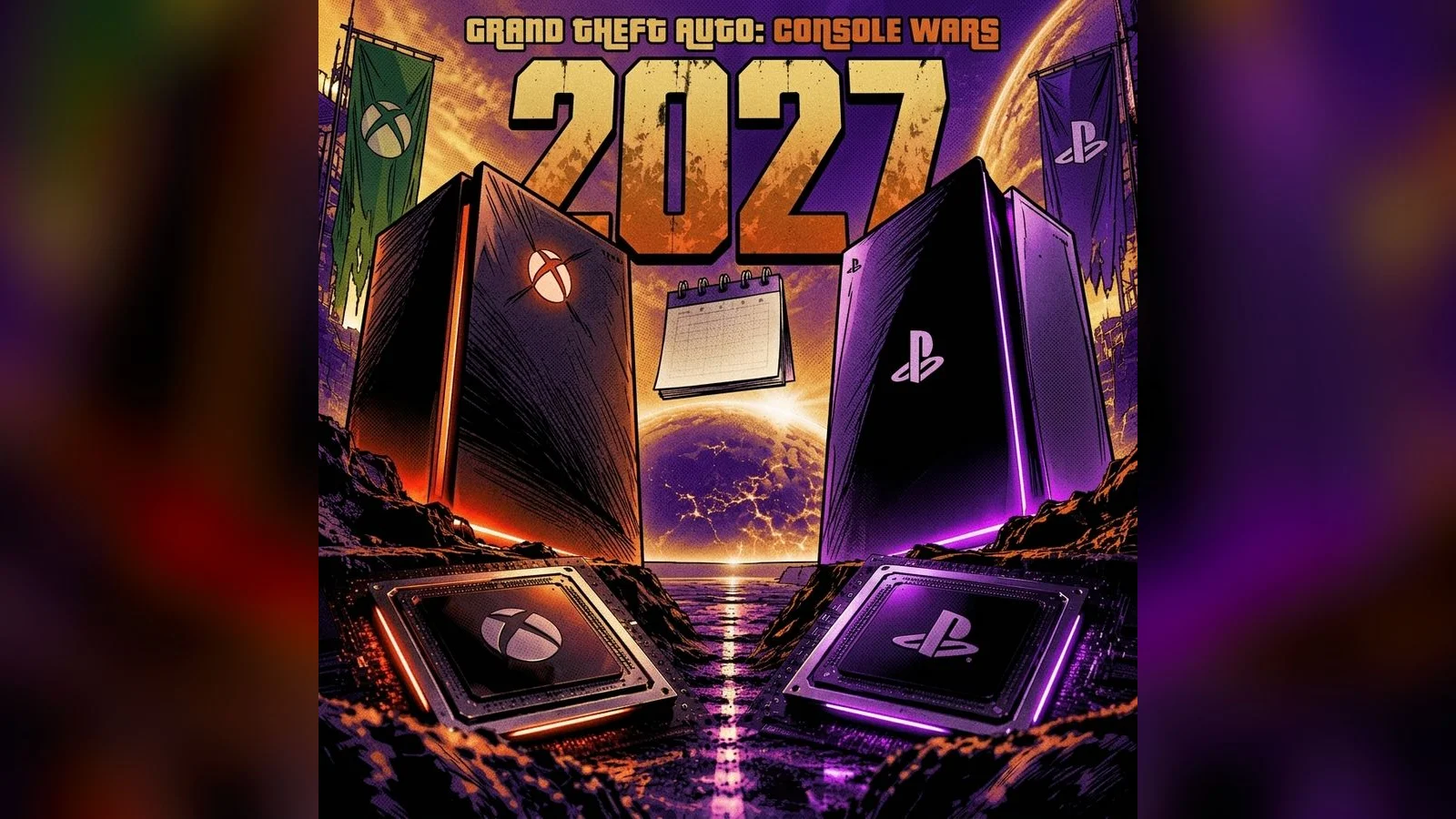
By Kepler_L2, a leaker with a track record on console silicon, has put a date on the next generation: November 2027 for both PlayStation and Xbox. The figures attached to it are 40 teraflops for PS6, with ray tracing quoted at roughly twelve times the throughput of PS5, and 56 teraflops for the Xbox side, circulating under the codename Helix. Both chips are said to be out of design and into volume production.
Treat the numbers as what they are. Teraflops compared across different architectures is a measurement that flatters whoever has the bigger one, and a 56-against-40 gap on paper has never once predicted which console people actually buy. The RTX 5080 comparison doing the rounds is the same trick with a third architecture bolted on. What the claim is genuinely useful for is the calendar, because a chip already in mass production is a chip whose launch window has stopped being a guess.
And the calendar is the part that touches us. GTA 6 arrives 19 November 2026 on PS5 and Xbox Series X|S. If the next machines land in November 2027, the game spends exactly one year as the biggest thing on current hardware before the generation under it moves.
That timing also explains a decision that has annoyed people for eighteen months. GTA 6 ships on two consoles and nothing else — no PC at launch, no last-gen. Rockstar put GTA 5 on the PS3 in 2013, a seven-year-old box, then sold it again on two further generations. A studio planning in those spans does not build for the hardware that is retiring; it builds for the hardware that is about to be everywhere, and then it sells you the upgrade.
So the practical read on a November 2027 next-gen has little to do with who wins a teraflop argument, and a lot to do with the shape of the next four years for this game: a current-gen launch, a PC version at some point after it, and a next-gen edition somewhere in the middle. None of that is announced. All of it is what Rockstar has done every single time.