GTA 6 lighting: how Rockstar lights Leonida
← Leonida Hub By Alex · Last updated:
| Status | Confirmed |
|---|---|
| Rendered on | Base PS5, in-game (Trailer 2)Confirmed |
| Signature look | Golden-hour bounce, neon at nightConfirmed |
| Indirect lighting | Ray-traced GI and reflections on a base PS5Confirmed |
| Day-night cycle | Full cycle with weatherConfirmed |
| Shadows | Sun and main shadows via shadow maps, not raysConfirmed |
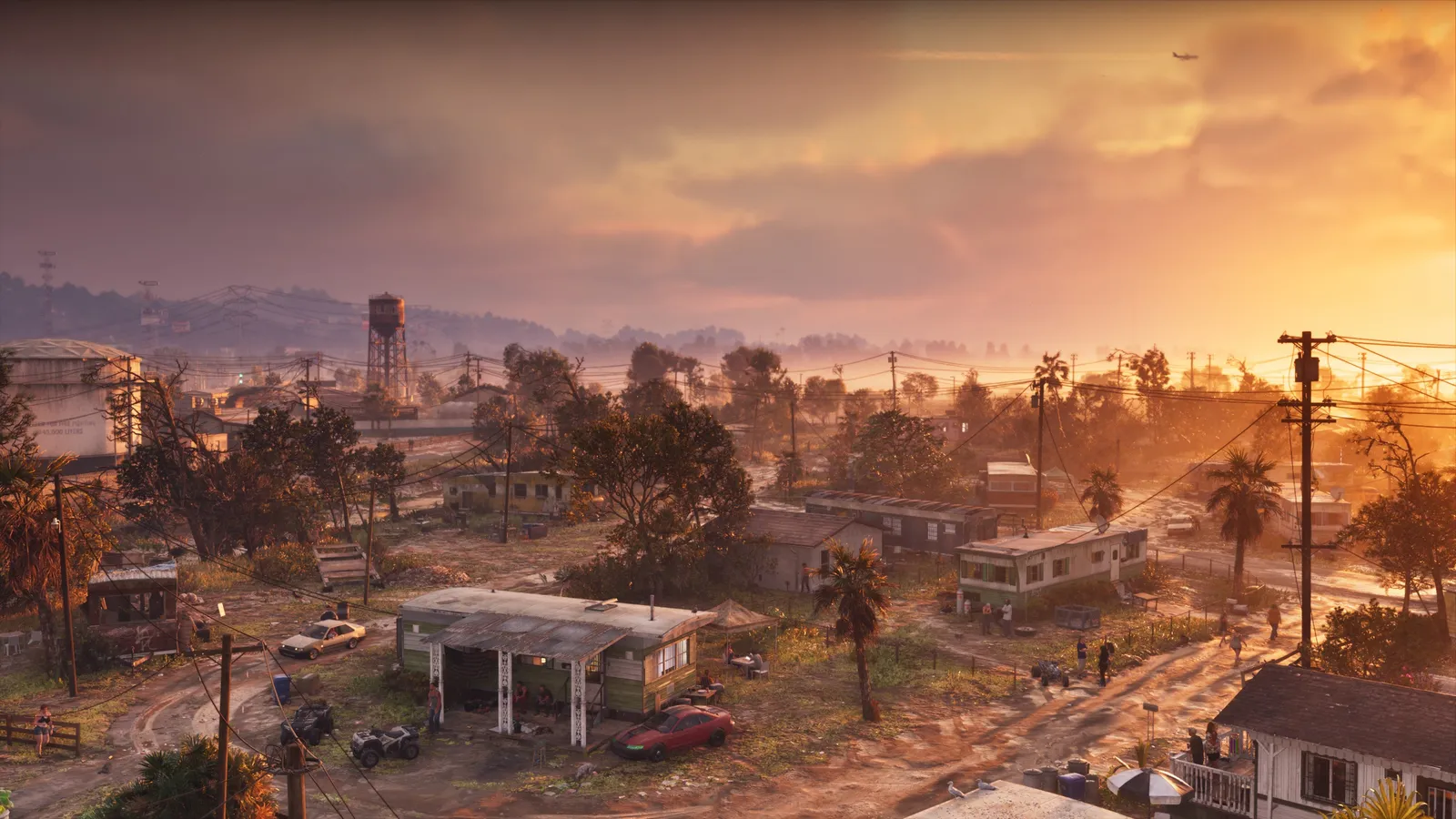
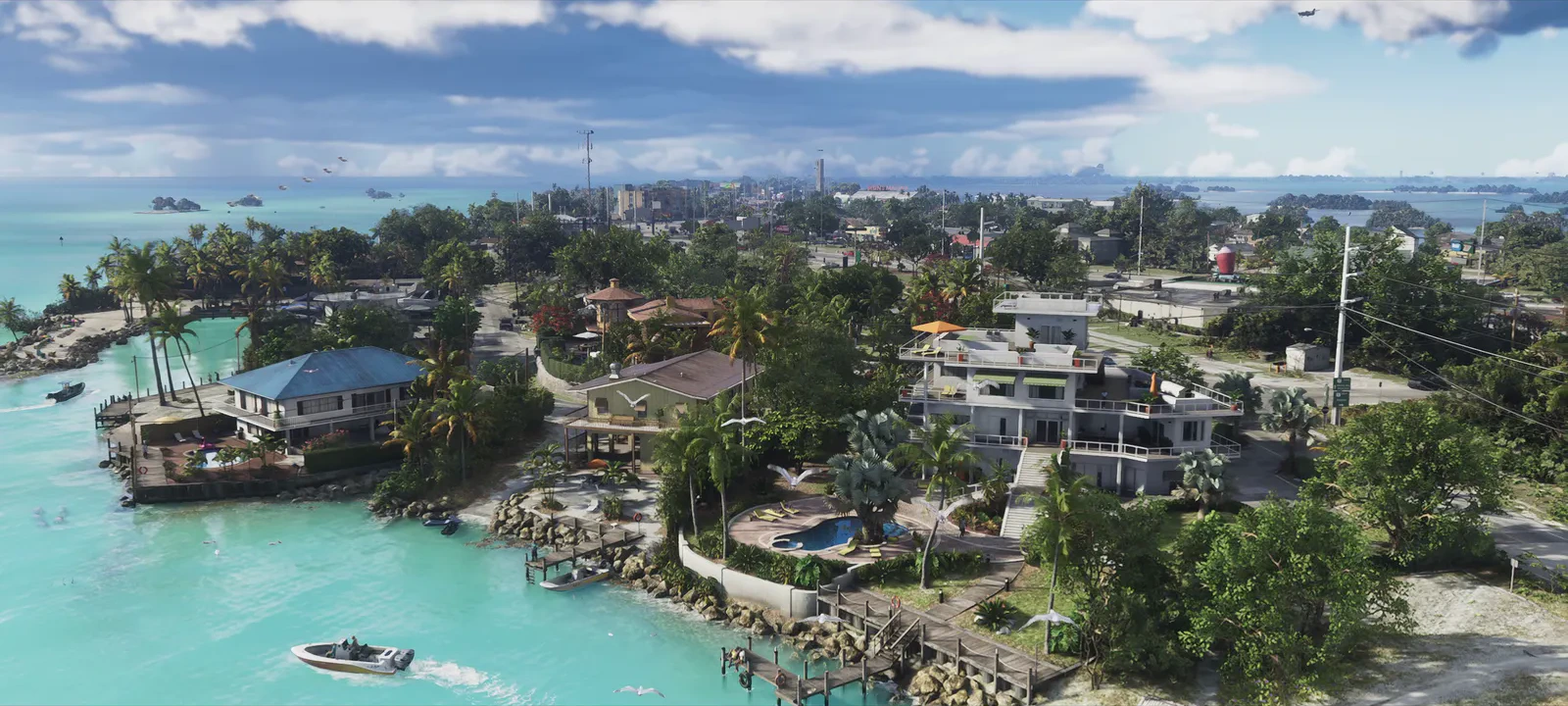
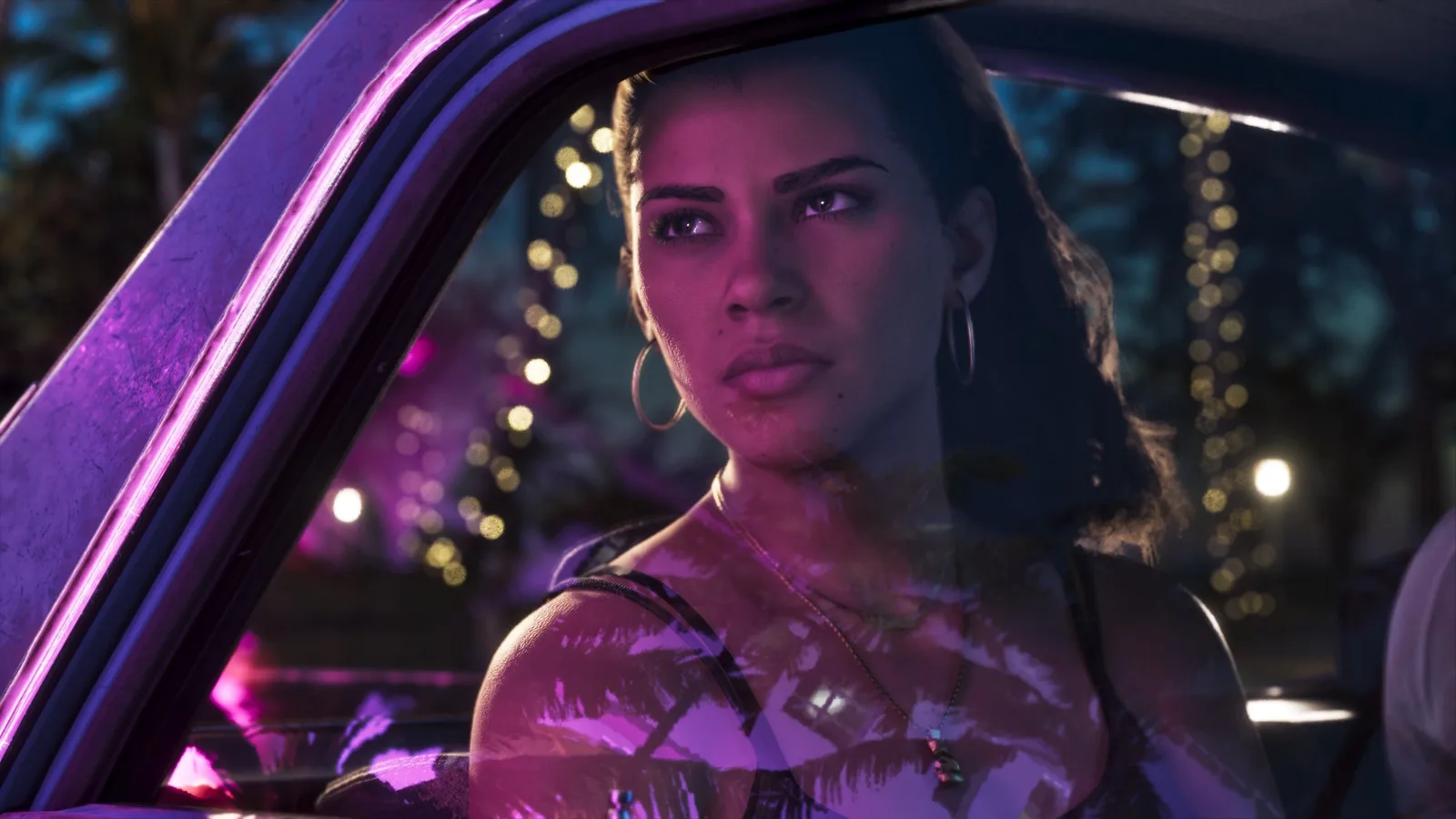
Vice City in GTA 6 looks the way it does because of one thing: light that bounces. Sun hits a pink wall on Ocean Drive, the wall throws pink into the shadow across the street, and the shadow is never black. That is indirect lighting, the most expensive thing a renderer does, and Trailer 2 — captured in-game on a base PS5 — is full of it. Since the first trailer the open question had been how Rockstar pays for it. An Extended Look answered: the bounce is ray-traced — global illumination and reflections both — on a base PS5, while the sun and the main shadows stay on shadow maps. This page reads the trailers for what that combination does to the picture, and where in the frame you can tell.
| Element | What you see | Technique | Confidence |
|---|---|---|---|
| Bounce light | Coloured shadows, lit interiors from windows | Ray-traced global illumination | Confirmed |
| Reflections | Neon on wet asphalt, glass, chrome | Ray-traced reflections | Confirmed |
| Shadows | Soft under palms, sharp under noon sun | Shadow maps — not ray-traced | Confirmed |
| Sky and haze | Layered clouds, humid haze, storm fronts | Volumetric atmosphere and clouds | Confirmed (in frame) |
| Materials | Pastel stucco, chrome, glass, sweat | Physically based rendering | Confirmed (in frame) |
Golden hour and the bounce problem
Florida light is the hardest kind to fake. Low sun, humid air and pale buildings mean most of what you see is light that has already hit something else. Older engines cheat with an ambient term — a flat fill that makes shadows grey and interiors dead. Trailer 2’s interiors are not dead: rooms are lit by what comes through the window, the colour of the wall outside is on the ceiling inside, and shadow under the palms on Ocean Beach carries sky blue rather than grey. That behaviour is global illumination, and there are two ways to get it. Precomputed probes bake the bounce into the world in advance and are cheap at runtime but struggle when things move. Ray-traced GI computes it live and handles a moving sun, moving cars and opened doors, at a cost the PS5 can only just afford. Rockstar took the expensive road: the extended look runs ray-traced GI on the base machine. That is why a room lit through a window changes as the sun moves across the day instead of holding a baked mood.
Neon and the night city
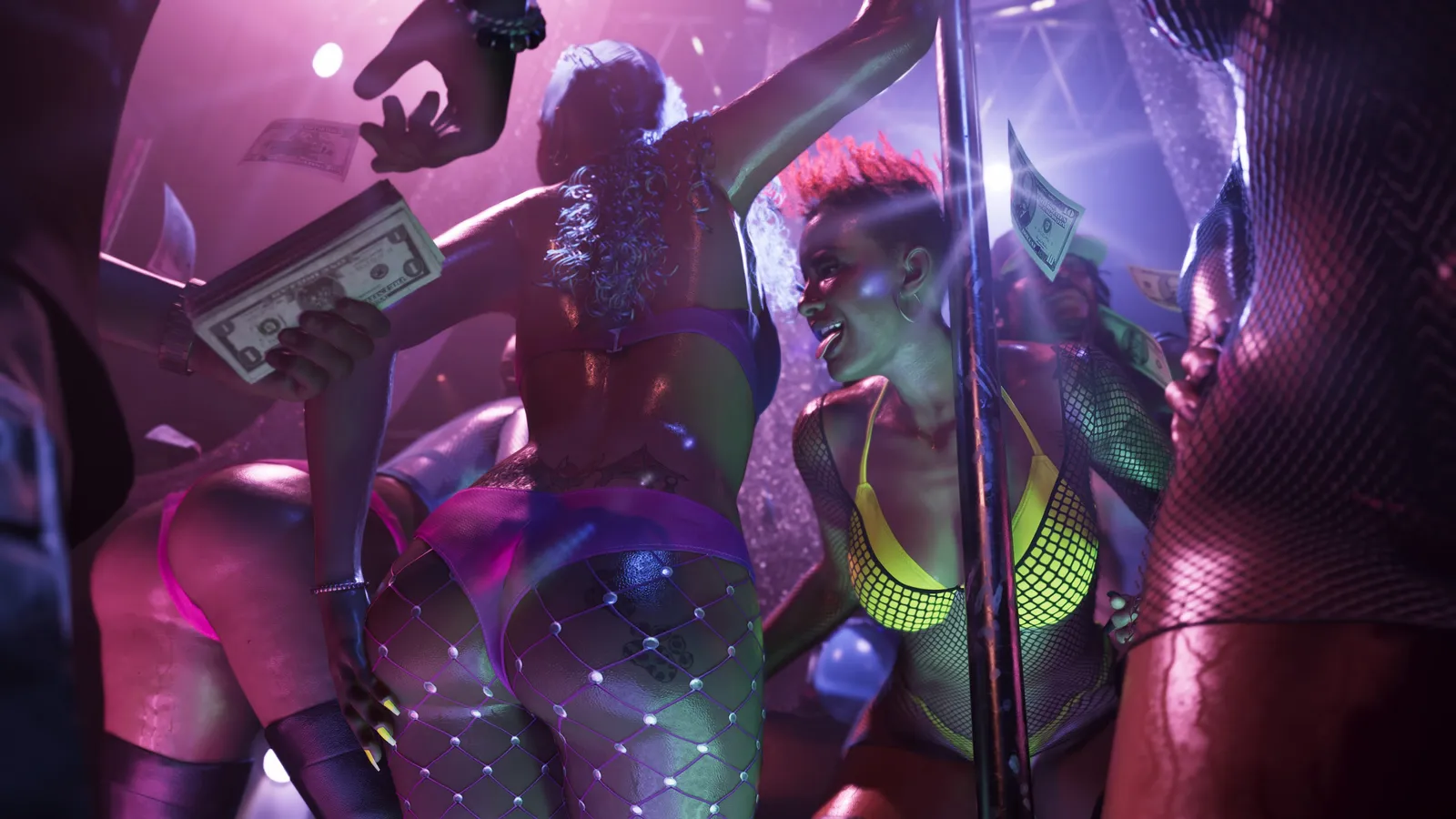
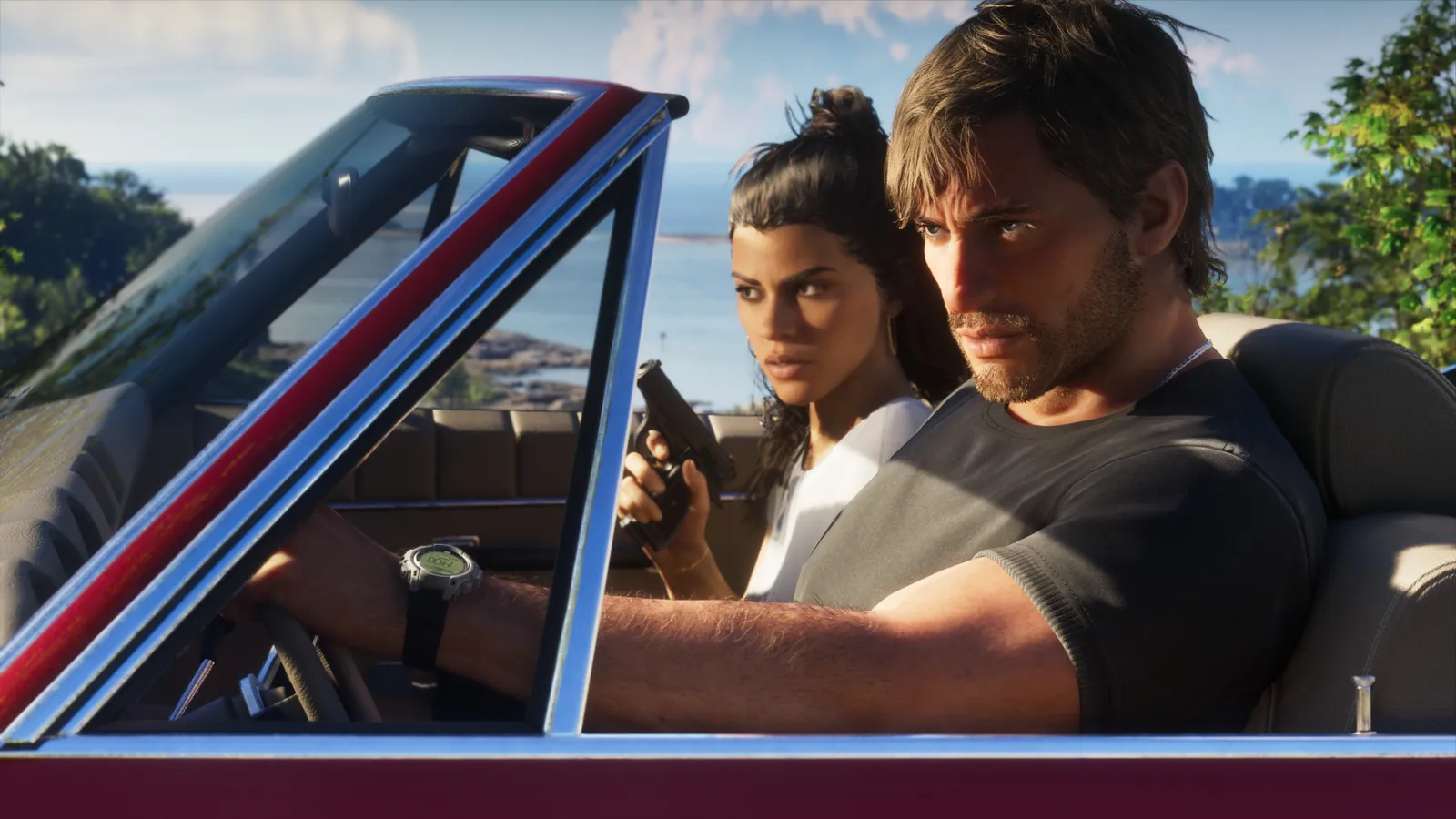
Night is where the local-light count matters. A Vice City street at midnight has hundreds of emitters — signs, headlights, storefronts, phones — and each one has to light the pavement, the cars and the people walking past. The trailers’ club and street scenes show exactly that: skin picking up magenta from a sign, wet asphalt carrying the reflection of the sign across the road. Reflections are the tell. Screen-space reflections fall apart at frame edges and behind characters; ray-traced reflections survive. The night shots in Trailer 2 hold reflections in places screen-space usually loses them — and the extended look confirmed the reason. Reflections are on the ray-tracing budget too, not just the bounce.
Skies, haze and weather
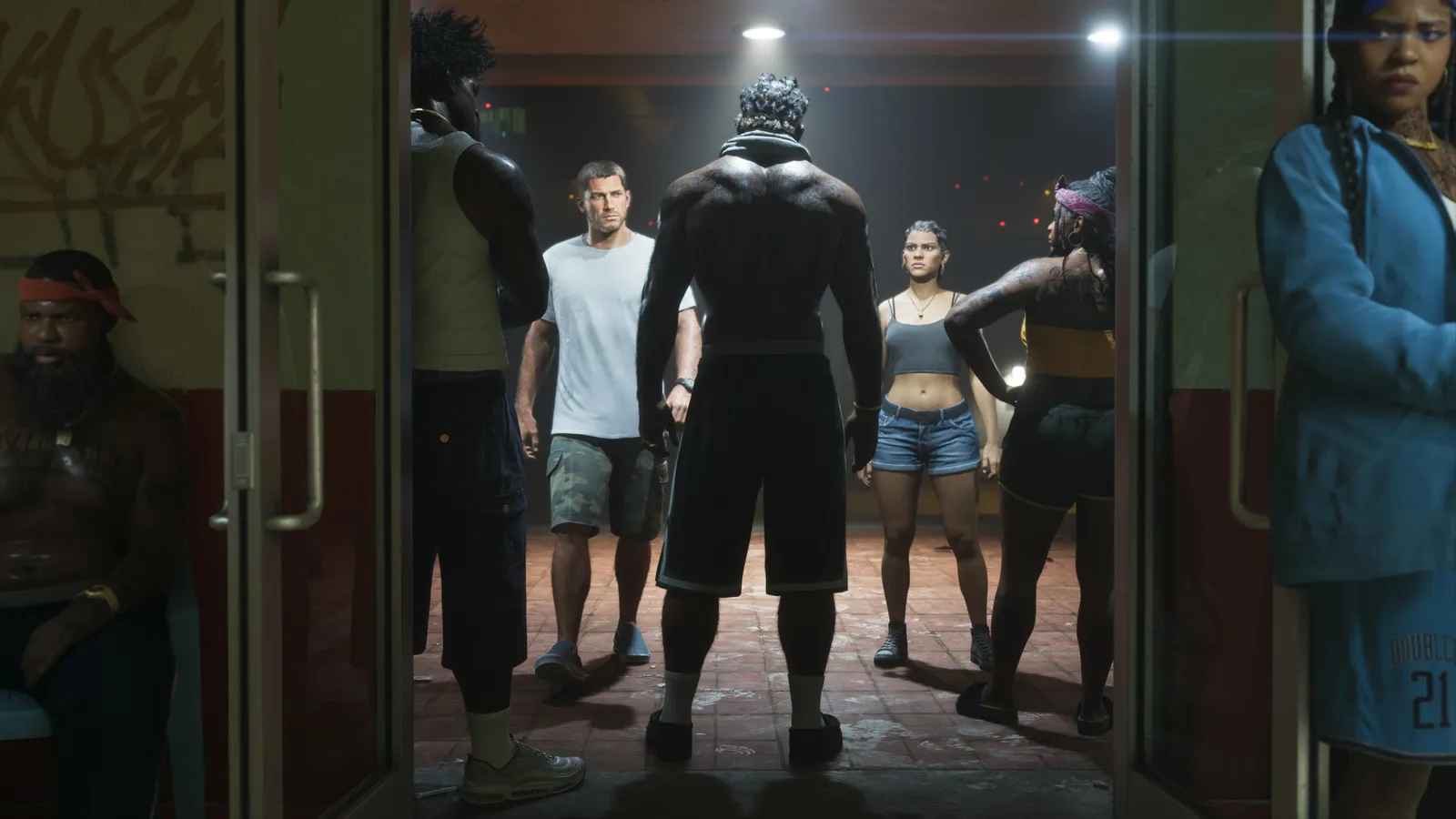
Florida sky is a character in these trailers — towering cumulus, afternoon storm fronts, haze that turns distant towers into silhouettes. Rockstar has run volumetric clouds since RDR2, and GTA 6’s skies read as the next iteration: layered cloud with light scattering through it, and haze that thickens with humidity. That system also carries weather: a storm is not a texture swap, it is the same atmosphere with more water in it, which is why rain in the trailers darkens the light rather than just adding drops.
Materials in a wet, hot city
Physically based materials are standard now; what changes is how far they go. The trailers show sweat as a separate layer on skin, chrome that reflects the environment correctly, stucco that looks rough in raking light and flat at noon, and glass with real refraction on the towers. Wetness is its own material state in this engine — surfaces darken and sharpen their reflections as they get wet — and Vice City after a storm is where it earns its cost.
What it costs, and where Rockstar saved
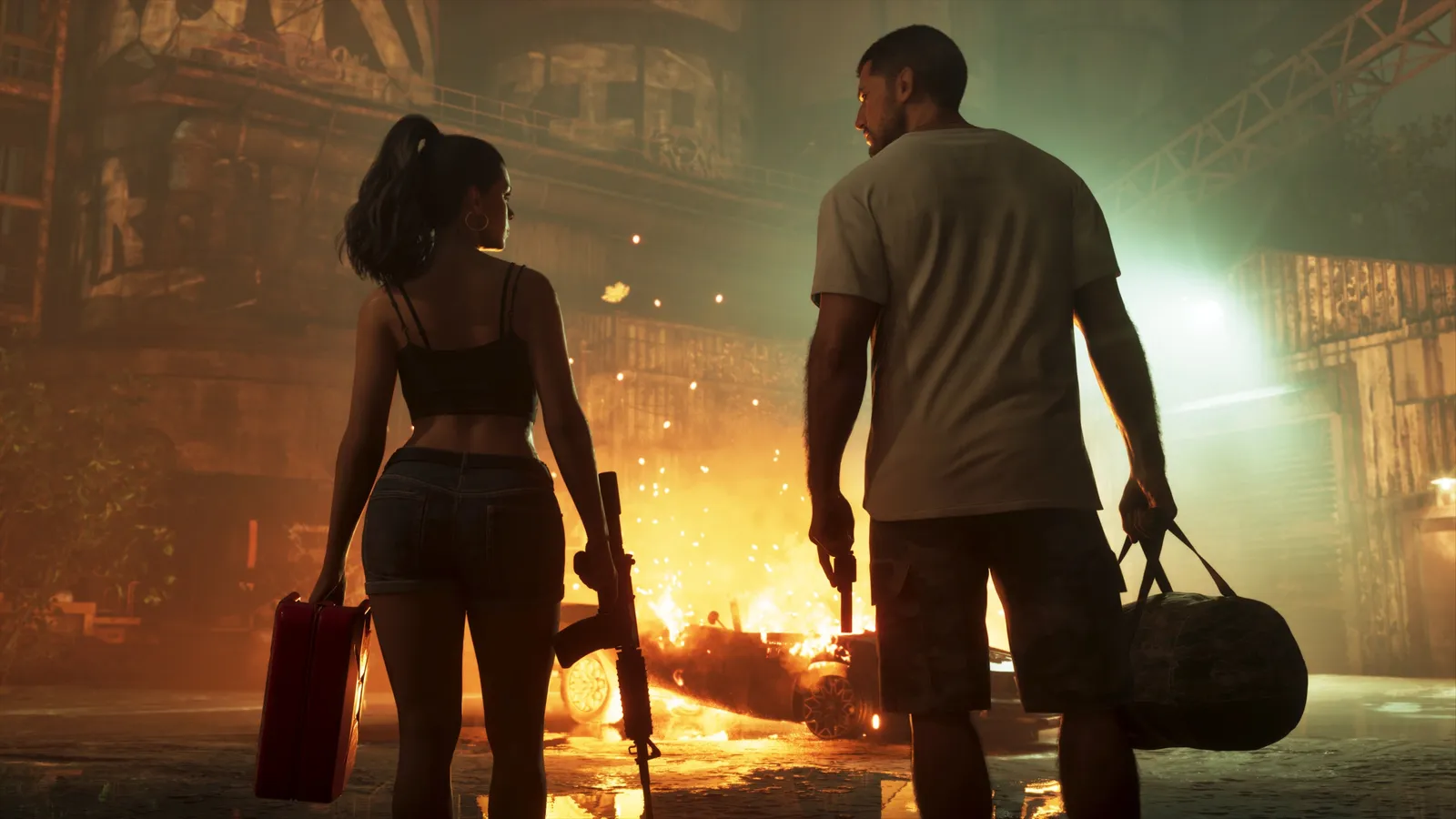
Every technique above spends the same budget: milliseconds per frame, and the extended look showed the bill. Live GI, ray-traced reflections, volumetric sky and dense crowds on a base PS5 come out at 1440p and 30 fps, with no temporal upscaler softening the image on the way to 4K. That is the whole trade, stated plainly: picture over speed.
The saving is in the shadows. Sun and the main shadow pass still run on shadow maps — the cheap, decades-old technique — rather than being traced. It is the right corner to cut: a hard shadow edge is something the eye forgives, a dead grey interior is not. Look for it in bright noon exteriors, where a shadow boundary can shimmer slightly at distance. The graphics hub keeps the rest of the numbers.
FAQ
Does GTA 6 use ray tracing? Yes, on a base PS5 — ray-traced global illumination and ray-traced reflections. The sun and the main shadows are not traced; they come from shadow maps.
Why does GTA 6 lighting look so realistic? Indirect light: shadows carry the colour of nearby walls and sky, and interiors are lit by their windows. That is global illumination, and in GTA 6 it is computed live rather than baked in advance.
Was the GTA 6 trailer lighting real-time? Trailer 2 was captured in-game on a base PS5, so every lighting effect in it runs in real time on that console.
Does GTA 6 have a day-night cycle? Yes — a full cycle with weather. The lighting system is built around a moving sun, which is one reason live global illumination fits.
Will GTA 6 look better on PS5 Pro? The store listing carries the PS5 Pro Enhanced badge, and Digital Foundry expects the extra GPU to go into resolution and ray-tracing quality. Not into frames: 30 fps is the target on Pro too.
Everything here comes from official Rockstar materials. Analysis is labeled. We don’t publish leaks.
By Alex · Last updated: