GTA 6 Graphics and Technology
← Leonida Hub By Alex · Last updated:
| Status | Confirmed |
|---|---|
| Engine | RAGE — Rockstar's in-house engineConfirmed |
| Trailer 2 | Captured in-game on a PS5Confirmed |
| Ray tracing | RT global illumination and reflections on a base PS5Confirmed |
| Frame rate | 30 fps on every console at launch; 1440p internal on PS5Confirmed |
| PC version | Later — no dateConfirmed |
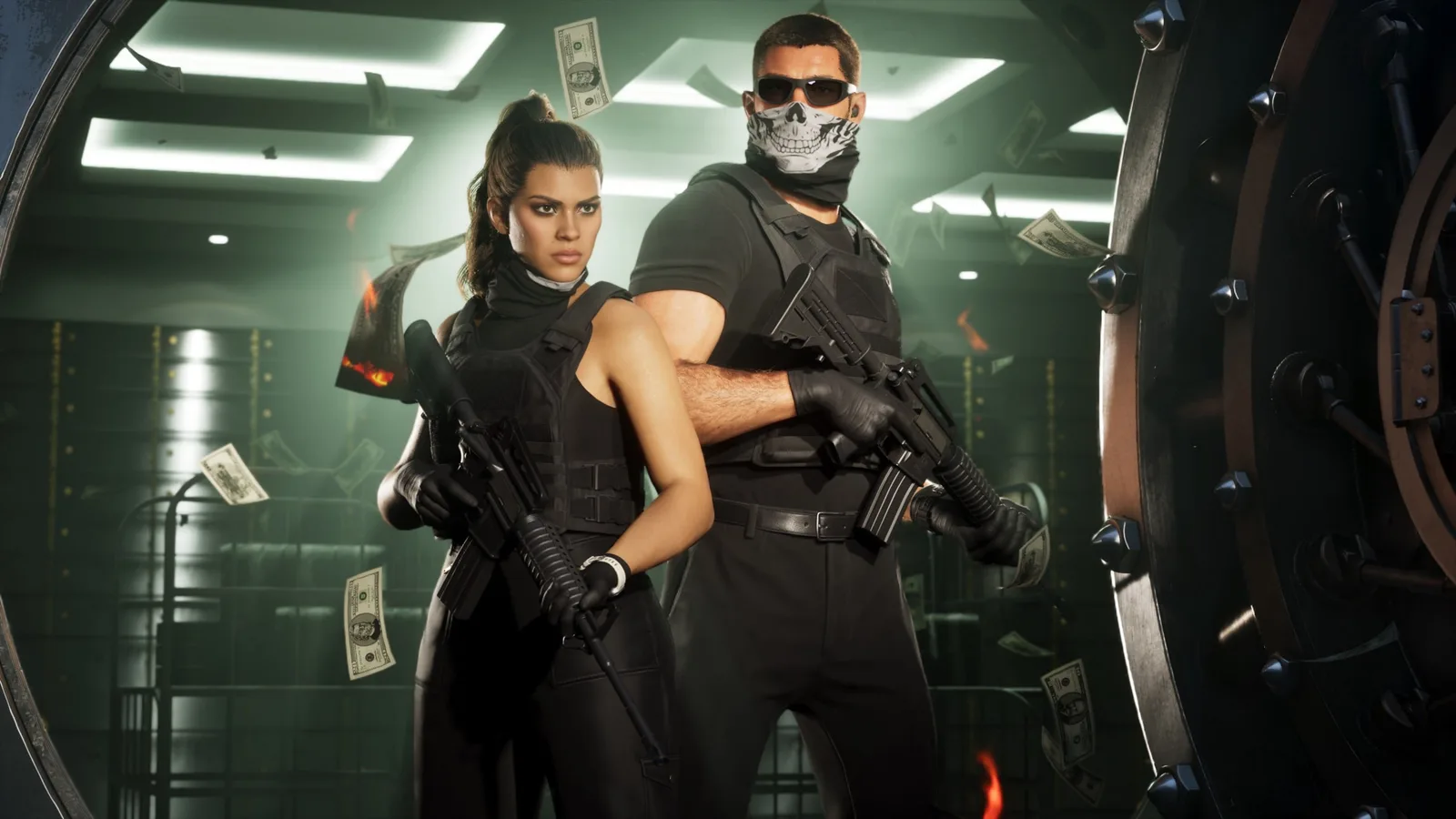
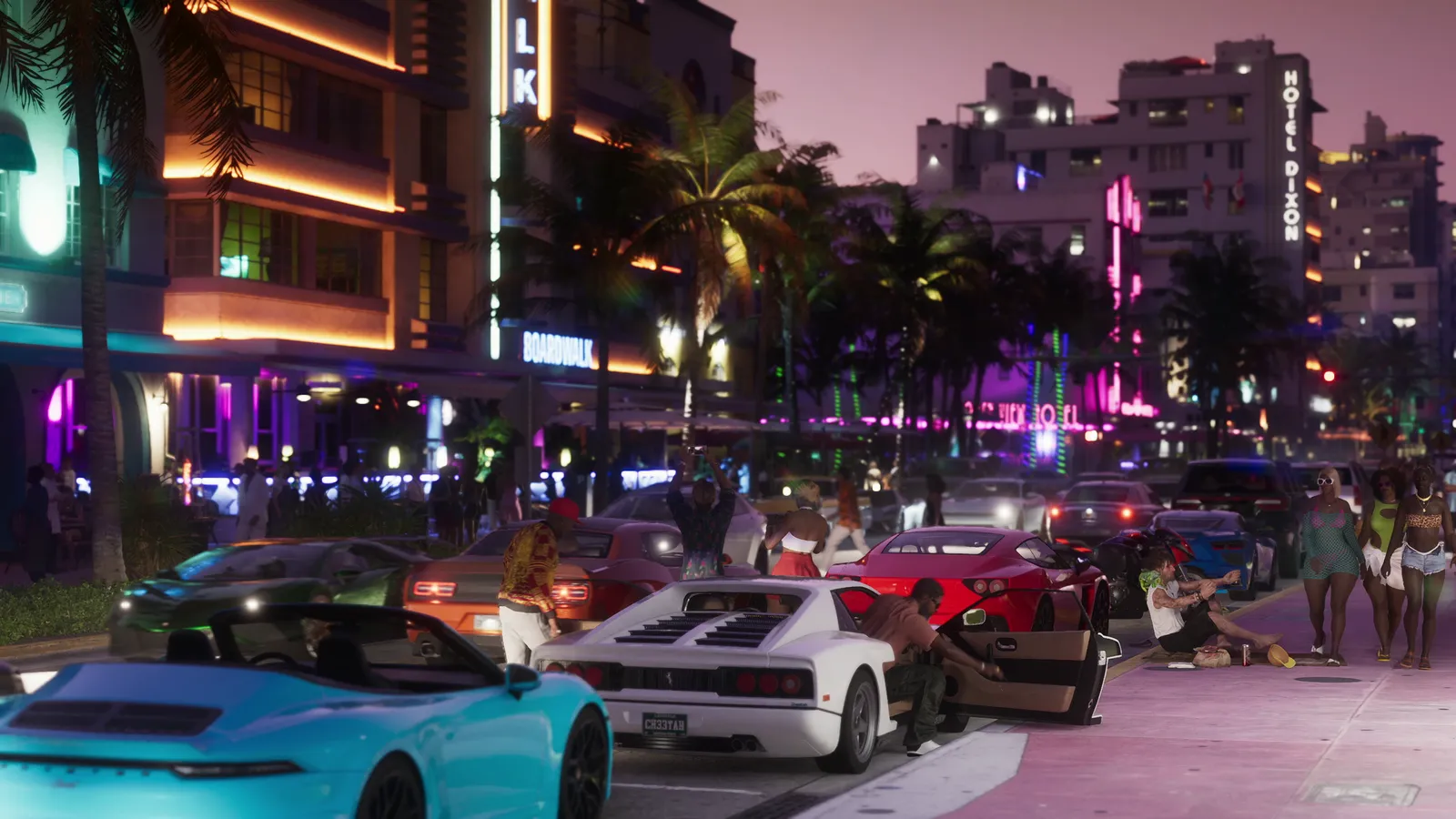
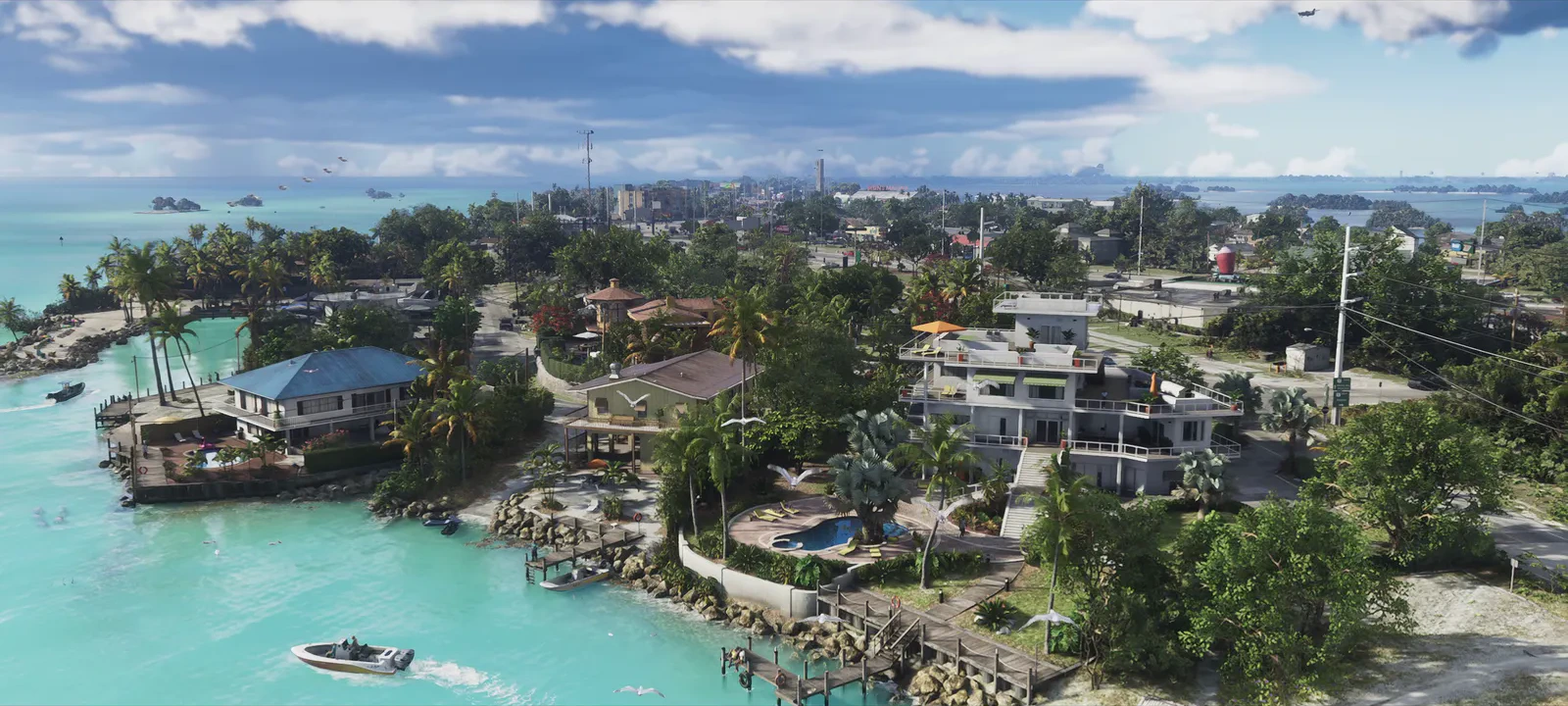
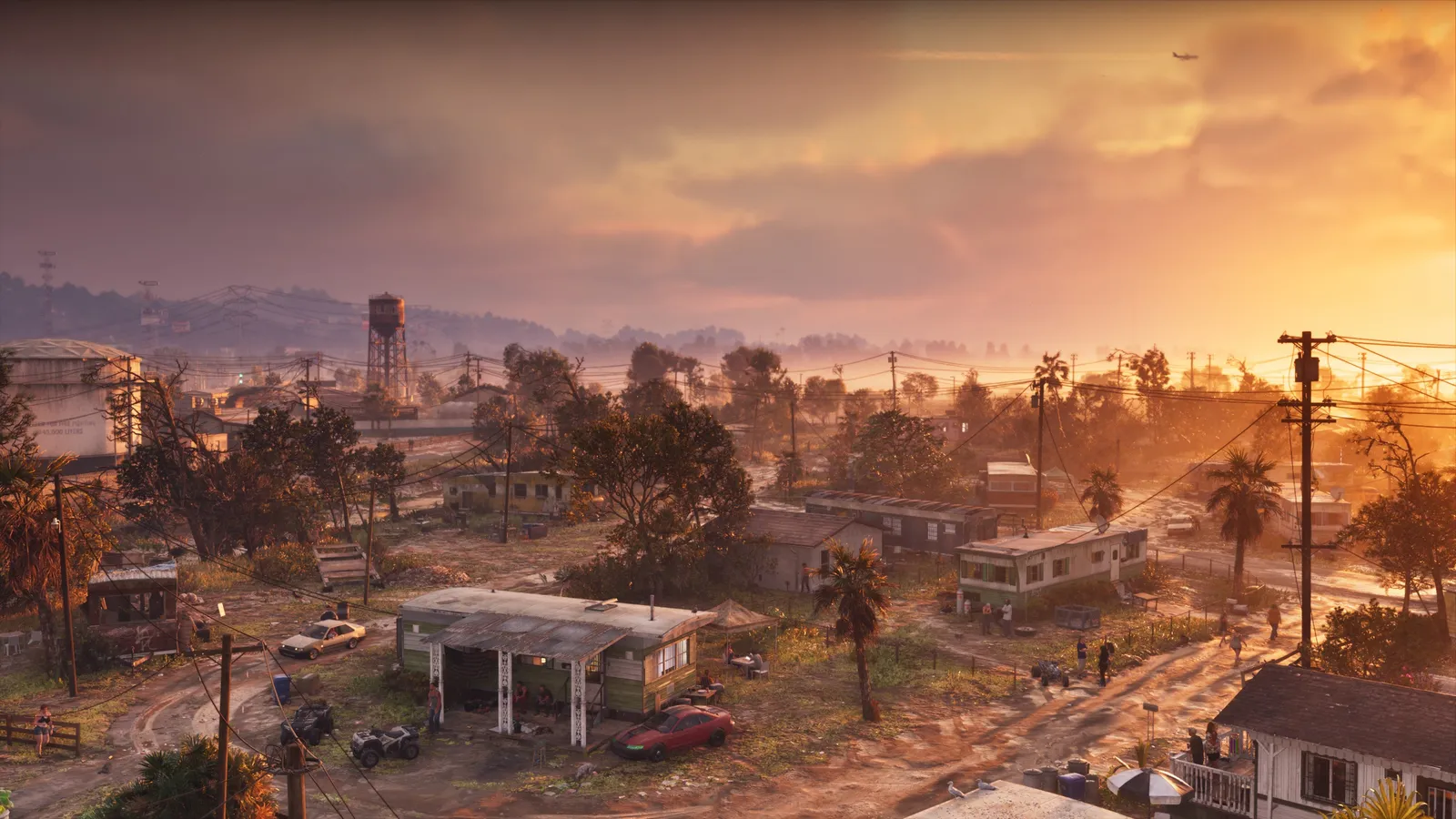
GTA 6 runs on RAGE, the engine Rockstar has built and rebuilt since 2006, and the second trailer was captured entirely in-game on a standard PlayStation 5. That single sentence from Rockstar is why the trailer landed the way it did: the sunsets over Vice City, the hair, the crowds and the water are the game, not a target render. Then An Extended Look put numbers on the picture: 1440p internally, 30 fps, ray-traced indirect light on a machine from 2020. This hub explains, from a practitioner’s seat, how each of those images is made — and links to the deep breakdowns on lighting, characters, water and animation.
| Area | What the trailers show | Deep dive |
|---|---|---|
| Lighting | Sunset and neon Vice City, soft interiors, lit night crowds | Lighting & rendering |
| Characters | Strand hair, skin under harsh sun, cloth on bodies, muscle | Character tech |
| Water & weather | Ocean, boat wakes, rain, storm skies | Water & ocean |
| Animation | Retargeting, facial capture, 600,000+ NPC animations | Animation tech |
| Platform | PS5 and Series X|S; PS5 Pro Enhanced | Platforms |
RAGE, a generation on
Rockstar Advanced Game Engine is the same lineage that rendered Los Santos in 2013 and the West in 2018, and every generation it swallows a new set of techniques without changing its name. Red Dead Redemption 2 already had volumetric skies, a physically based material system and one of the best deferred renderers of its generation. GTA 6 is that engine built for hardware five times faster, and the trailers show the two things that speed buys: light that behaves like light, and density — more people, more cars, more foliage, more things moving at once.

Why “in-game on a PS5” matters
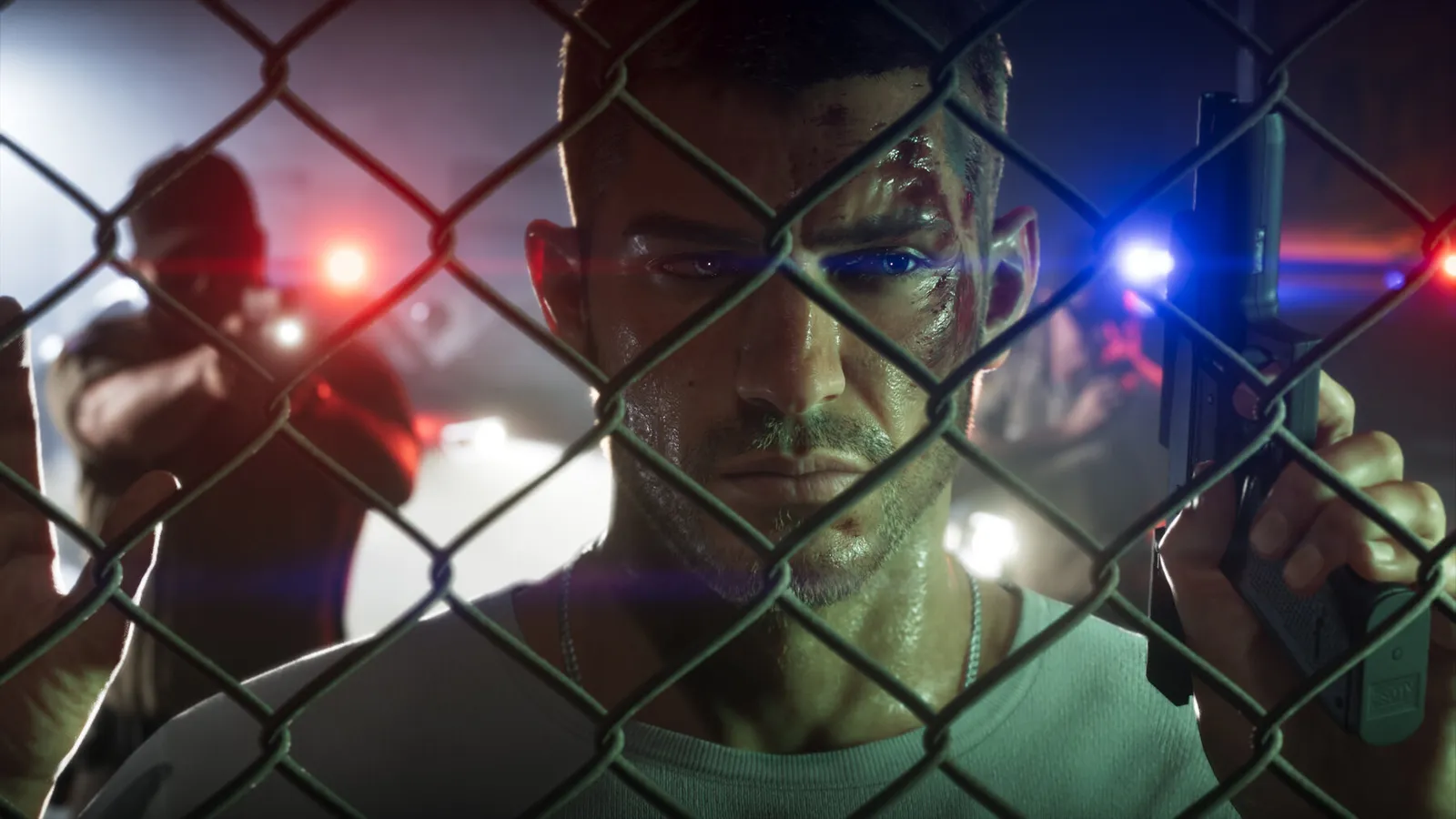
A trailer captured in-engine on a base console sets a floor, not a ceiling. Everything in Trailer 2 — the lighting, the hair, the water — is rendered by a 2020 console in real time, which is why every frame analysis since has focused on how, not whether. It also frames the PS5 Pro Enhanced badge on the store listing: the Pro has more GPU to spend, and Digital Foundry expects it to buy resolution and ray-tracing quality rather than frames. The base machine already produces the trailer.
The three pillars, briefly
Light. Vice City at golden hour is the trailers’ signature image, and it depends on indirect light — sky and sun bouncing off pastel walls into shadow. The extended look answered how: that bounce is ray-traced, global illumination and reflections both, on a base PS5, with the sun and the main shadows still drawn the cheap way through shadow maps. The lighting page walks through what that combination costs and where you can see the seams.
Skin, hair, cloth. Lucia’s hair moving in wind, sweat on skin in Florida sun, shirts that hang on shoulders rather than being painted on — these are separate systems with separate costs, and the character page takes each one apart. Hair is simulated root to tip, and fingers articulate individually.
Water. The ocean at Ocean Beach, wakes behind boats, rain on the Keys — water is where engines show their age fastest, and the water page covers what the trailers reveal and what a Florida storm demands.
Where the budget goes
The extended look settled the trade. On a base PS5 the game renders at 1440p internally and targets 30 fps — no dynamic resolution, no temporal upscaler, just a plain spatial upscale to 4K. Most current-gen games draw a smaller image and stretch it; Rockstar draws the bigger one and pays for it in frames. Rob Nelson has since said 30 fps is the target on every console at launch, PS5 Pro included.
What that budget buys is the world rather than the speed: ray-traced indirect light, hair simulated strand by strand, leaves that move as leaves, and well over 600,000 NPC animations against 55,000 in GTA 5. A 60 fps option is not off the table — Nelson says the decision still sits with the tech team, at launch or later — which makes the first patch notes worth reading closely.
FAQ
What engine does GTA 6 use? RAGE, Rockstar’s in-house engine, the same lineage as GTA 5 and Red Dead Redemption 2, rebuilt for current consoles.
Was GTA 6 Trailer 2 real gameplay? Rockstar states it was captured entirely in-game on a PlayStation 5. It is engine footage, not a pre-rendered target.
Will GTA 6 run at 60 fps? Nothing has been promised. The target is 30 fps on every console, PS5 Pro included, and Digital Foundry measured exactly that in the extended look. Rob Nelson says a 60 fps option is still the tech team’s call — at launch or in a later update.
Will GTA 6 be on PS5 Pro? Yes — the store listing carries the PS5 Pro Enhanced badge, which means dedicated improvements on Pro hardware.
Everything here comes from official Rockstar materials. Analysis is labeled. We don’t publish leaks.
By Alex · Last updated: