GTA 6 Character Tech: Hair, Skin, Cloth and Muscle
← Leonida Hub By Alex · Last updated:

| Status | Confirmed |
|---|---|
| Hair | Simulated root to tipConfirmed |
| Skin | Sweat layer, sun-lit skin in frameConfirmed |
| Cloth | Shirts and dresses move on the bodyConfirmed |
| Body deformation | Muscle and fat move with motion; fingers articulate individuallyConfirmed |
| Body changes | Gym builds muscle, overeating adds weight — visible on the bodyConfirmed |
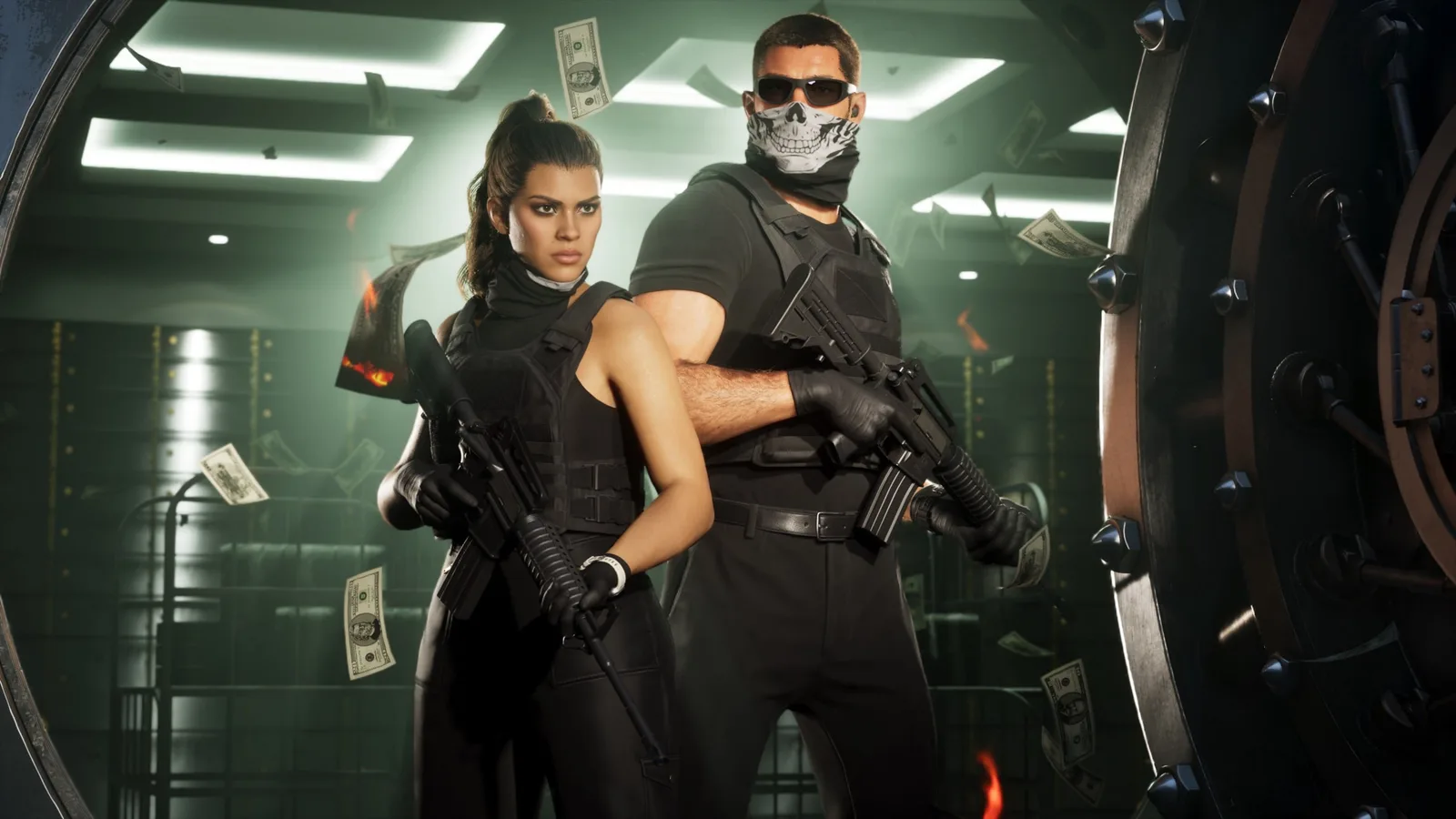
Jason and Lucia are the most convincing people Rockstar has put on screen, and the reasons are four separate systems working at once: hair simulated in strands rather than painted on cards, skin that scatters light and sweats, cloth that hangs on a body instead of being glued to it, and bodies whose muscle and fat move under the skin. Each of those has a cost, each shows up in Trailer 2, and together they explain why a beach crowd in GTA 6 looks like people rather than mannequins. This page takes apart the main technologies the developers used to get there; how those people move is on the animation page.
| System | In the trailers | What makes it hard | Confidence |
|---|---|---|---|
| Strand hair | Lucia’s hair lifting in wind and settling | Simulated root to tip, self-shadowing, collision with shoulders | Confirmed |
| Skin | Sun through ears and fingers, sweat, freckles | Subsurface scattering, layered wetness | Confirmed (in frame) |
| Cloth | Loose shirts, dresses, jeans folding at knees | Simulation against a moving body without clipping | Confirmed (in frame) |
| Muscle and fat | Shoulders and back under load; the gym changes the body | Deformation beyond skeleton skinning | Confirmed |
| Crowd variety | Hundreds of distinct beachgoers | Generating variety without repeated faces | Confirmed (in frame) |
Hair that moves like hair
For twenty years game hair was a stack of textured cards — flat ribbons with a hair image on them, cheap and stiff. Trailer 2 shows the alternative: Lucia’s hair lifting off her shoulders in wind, separating into locks and falling back with weight. The extended look confirmed it outright: hair is simulated from root to tip. Each visible strand is a curve that collides with the head, the shoulders and the other strands — and Digital Foundry noted the same treatment reaches the extremities, with fingers articulating individually rather than moving as a mitten. The cost is not the strands themselves but their shadows and the way light passes through them; hair in sunlight in the trailers glows at the edges, which only happens when the renderer treats it as translucent fibres. It shows best on Lucia: her hair is the most striking thing in any shot she is in. In wind it separates into individual locks, glows along the edge in sunlight and settles back with weight, instead of snapping to the one shape a card haircut always returned to. It also has to survive a convertible at speed and a motorcycle helmet coming off, and that is the part fans will test on day one.
Skin in Florida sun
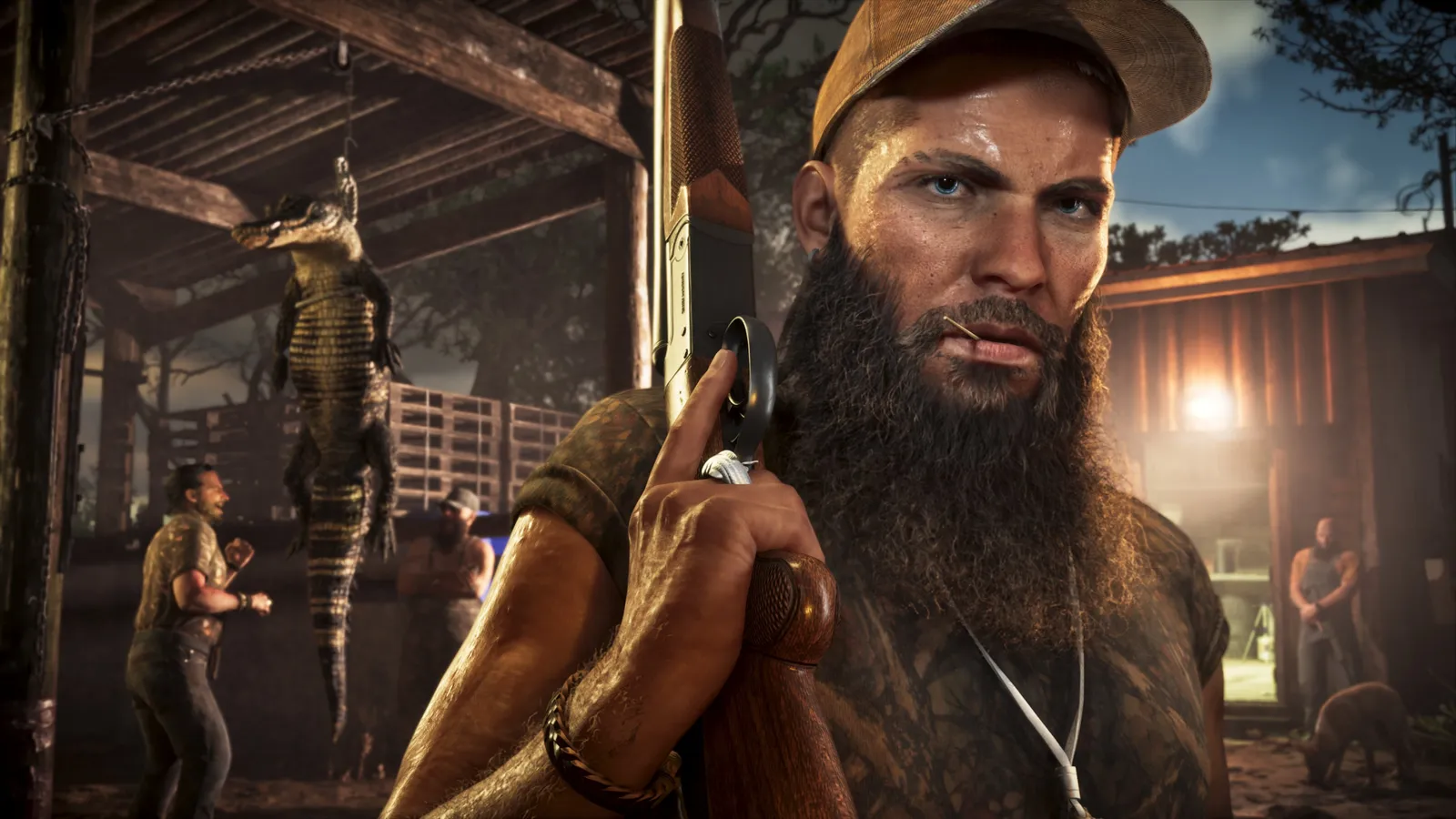
Skin is the material where cheap rendering is most obvious. Real skin is translucent — light enters, bounces inside and leaves somewhere else, which is why ears and fingers glow red against the sun and why faces never have hard shadow edges. That behaviour is subsurface scattering, and the trailers show it in the obvious places: backlit ears in the golden-hour shots, soft shadow under noses, sunlight through the edge of a hand. On top of it sits Florida: a wet layer of sweat that sharpens reflections on shoulders and foreheads, tan lines, freckles, hair on forearms. Sweat as a separate, dynamic layer is the detail that sells the heat, and it has to change with exertion and weather rather than being painted on.
Cloth on bodies
Clothes are where most games clip. A jacket sewn to the skeleton stretches with the arm; a simulated jacket hangs and swings and, badly, pokes through the chest. The trailers favour the hard cases: Jason in a loose open shirt, Lucia in dresses, jeans folding behind the knee, straps on shoulders. What you see is cloth that responds to movement and wind while staying on the body, which means simulation running against the animated mesh every frame, with collision — the expensive route. It matters more in GTA 6 than elsewhere because the customization stores promise a wardrobe, and every outfit has to survive every animation — including the spare set of clothes you now keep in a car boot to shake the police.

Muscle and fat under the skin
Skeleton skinning moves the surface with the bones; it gives you a bending arm with a collapsing elbow. Rockstar’s characters since RDR2 have had more — shoulders that bunch, a back that shifts under load, a belly that follows a turn. Trailer 2’s shots of Jason working the roof and hauling in the Keys show that deformation: mass moving with effort, not just angles changing. Whether that is muscle simulation, a layer of corrective shapes or a machine-learned deformer is impossible to tell from footage. What the extended look adds is that the same system carries the body through change, not just through motion — see below.
The crowd problem
Every system above has to scale. A beach in Trailer 2 holds hundreds of people, each with hair, skin and clothes, and the trick is spending the full budget only on the ones close to the camera. Distant beachgoers get card hair and simple cloth; the ones you walk past get the strand-and-simulation version, swapped without a visible pop. The extended look raised the bar on the input side too: Leonida’s population comes in more body shapes and heights than any Rockstar world before it, and animations retarget on the fly so a tall NPC and a short one open the same door believably. That is what more than 600,000 NPC animations are for.

The body changes, and that is the point of the pipeline
The wish that followed all of this was body customization — weight and muscle changing with food and exercise, San Andreas style. An Extended Look granted it. The gym is a minigame: work the set and the muscle follows, visible on the character. Overeating adds weight. Days without sleep show on the face.
Technically that is the same deformation layer doing double duty. A rig that already moves mass with effort can move mass with diet, and cloth simulated against the body rather than sewn to it keeps fitting when the body underneath changes shape. It is the reason this pipeline was worth its cost: a shirt that hangs correctly on one Jason has to hang correctly on the heavier one you made at the diner, over a pile of burgers.
FAQ
How does hair work in GTA 6? Trailer 2 shows Lucia’s hair lifting and settling in wind — strand-based hair simulated as individual curves, with light passing through it, rather than flat textured cards.
Why does skin look real in GTA 6? Subsurface scattering: light enters the skin and leaves elsewhere, giving backlit ears and soft shadows. Sweat sits on top as a separate reflective layer.
Does clothing clip in GTA 6? The trailers show simulated cloth — loose shirts and dresses that move with wind and body without pushing through. How it holds across every outfit is a launch-day test.
Do bodies deform realistically in GTA 6? Trailer 2 shows Jason’s shoulders and back moving under load, beyond simple skeleton skinning — mass that follows effort, and the same layer carries the shape changes the gym produces.
Can you change your body in GTA 6? Yes. The gym builds muscle and strength, visible on the character; overeating adds weight, and sleepless benders show on the face.
Everything here comes from official Rockstar materials. Analysis is labeled. We don’t publish leaks.
By Alex · Last updated: